PROJECT MIDSTATE, MIDWEST
Verra ID
VCS3616
Total VCUs
118521
Status
Sold
Project: VCS3616 Recycling Roadways for Emission Reductions - Midstate Reclamation and Trucking
Country: United States
Location: Midwest & Rocky Mountain Regions
States: Minnesota, Wisconsin, Iowa, Indiana Tennessee, Utah, North Dakota, Montana, Wyoming, Utah, Colorado, and Nevada.
Minnesota, Wisconsin, Iowa, Indiana Tennessee, Utah, North Dakota, Montana, Wyoming, Utah, Colorado, and Nevada.
Project Details:
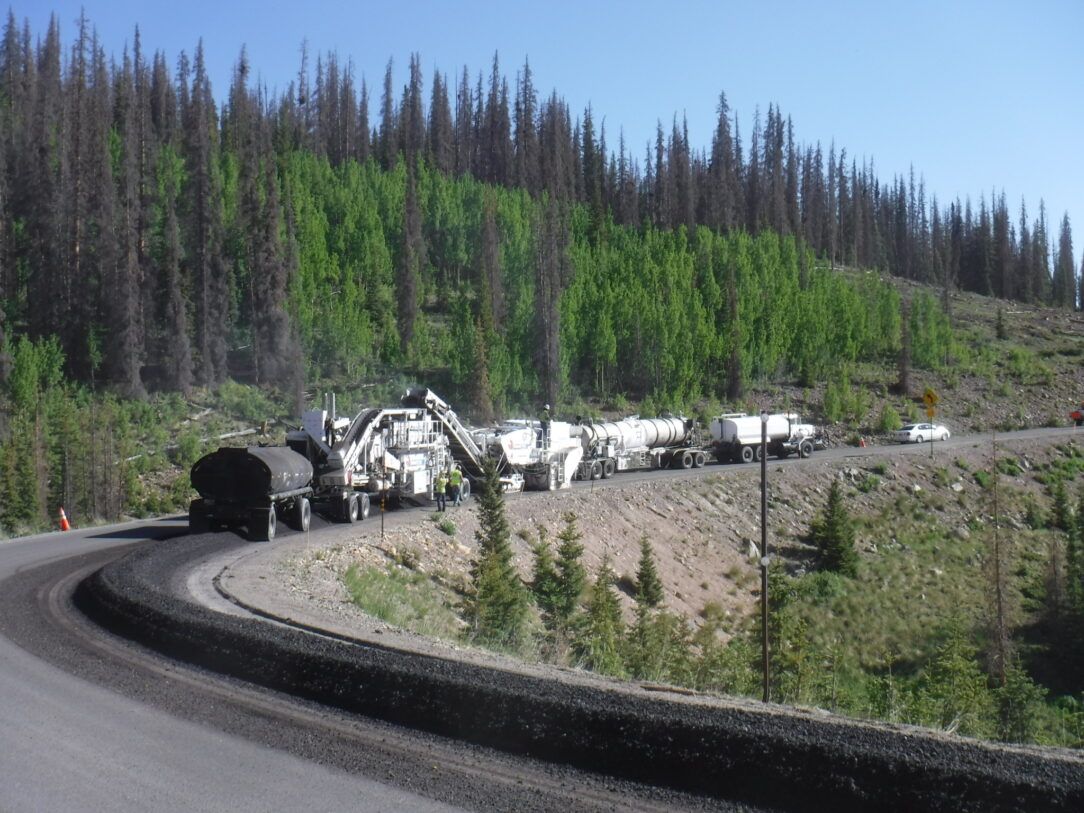
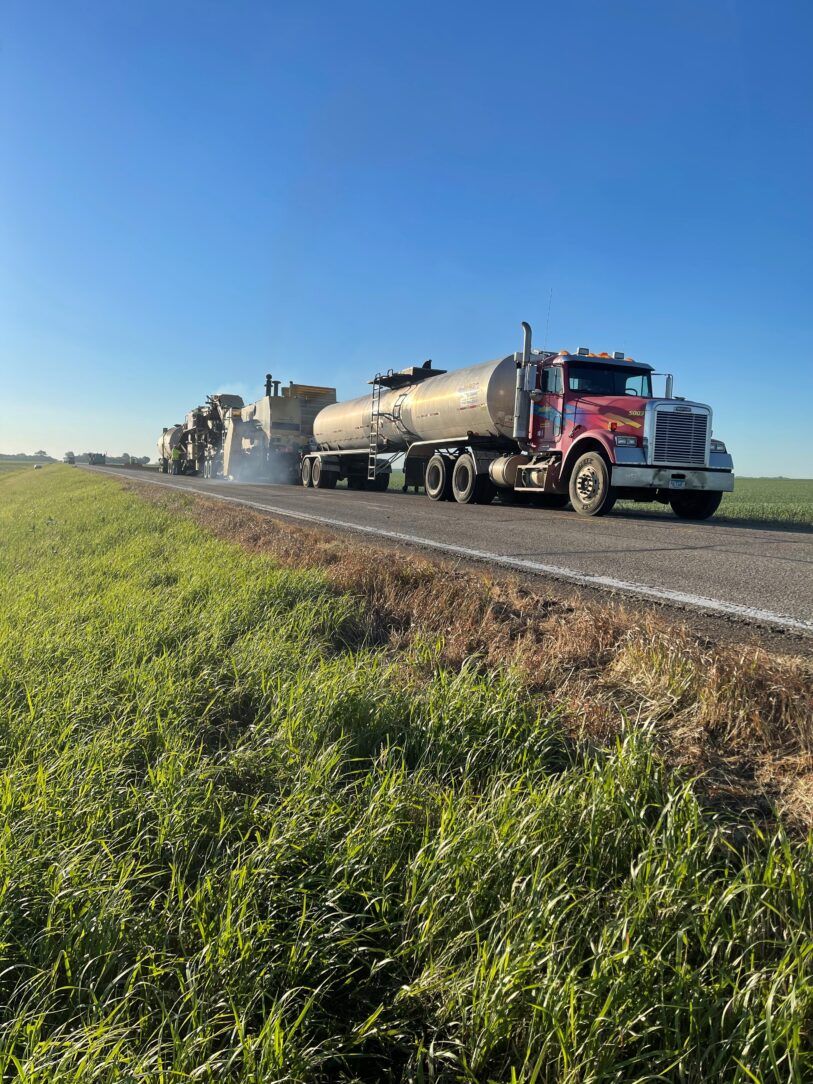
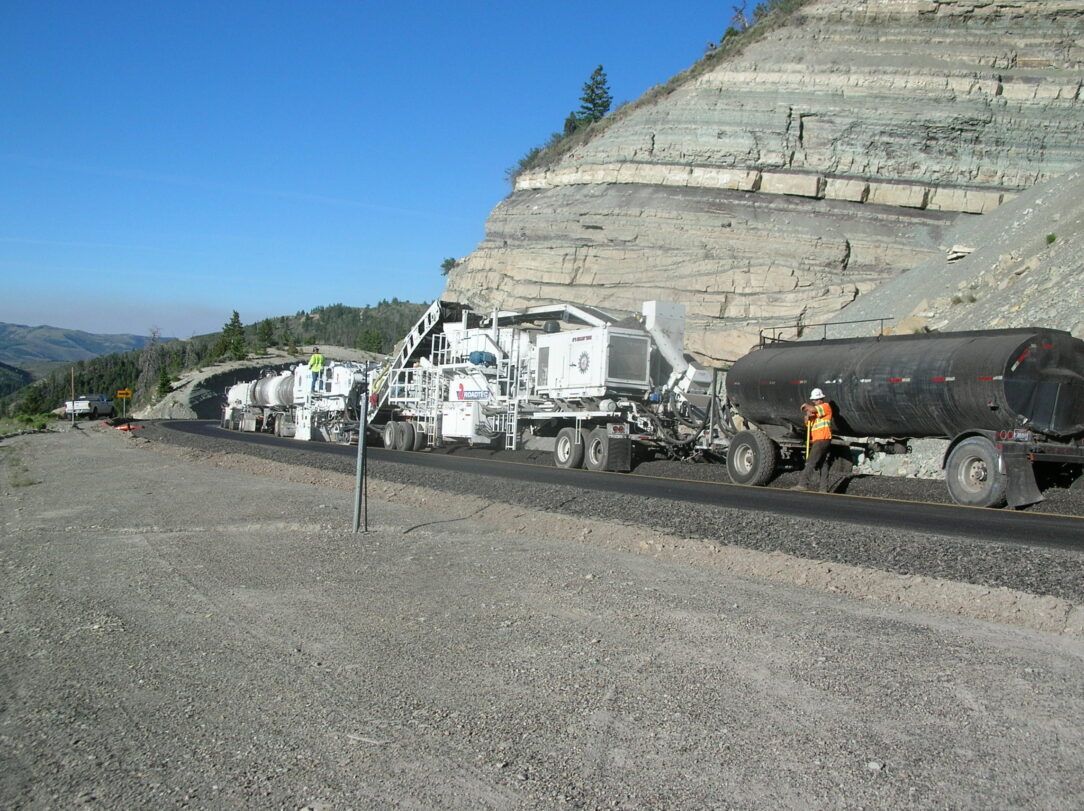
Cold-Recycling Roadway methods that radically reduce paving emissions up by up to 60% were used across the Midwest and Rocky Mountain regions of the United States. Including States: Minnesota, Wisconsin, Iowa, Indiana Tennessee, Utah, North Dakota, Montana, Wyoming, Utah, Colorado, and Nevada. This project reclaimed over 1.8 metric tons of existing roadway, reconstructed over 2,800 miles of roadway and prevented release of over 8,000 tonnes of Volatile Organic Compounds (VOCs) and saving a verified 118,521 tCO₂e from entering the environment in the locations below.
Global Emissionary’s Verra Approved VM0039 methodology credits sustainable roadway construction with these key environmental factors in mind.
- Reduced energy consumption: Eliminate the need for extensive heating of materials, as required in traditional hot mix asphalt methods. This significantly reduces energy consumption and associated greenhouse gas emissions.
- Preservation of natural resources: Reusing existing pavement materials reduces the demand for new aggregate and asphalt, thus preserving natural resources.
- Minimization of waste: By recycling existing pavement materials on-site, minimizing the need for disposal in landfills and reducing the environmental impact of waste management.
- Lower carbon footprint: Due to reduced energy consumption, preservation of natural resources, and minimized waste generation, recycling existing pavement results in a lower overall carbon footprint compared to conventional road construction methods.
By supporting this project, companies play an integral role in ensuring the road network their businesses rely upon are built through eco-conscious methods. Join us in paving the way for a greener tomorrow. Purchase carbon credits that take part in supporting roadways built with the environment in mind.
What is Cold Recycled Asphalt? Cold recycled asphalt represents a cleaner way to repave roads that promotes circularity and can bring important benefits to municipalities.
The Heavy Emissions of "Business as Usual" When roads are repaved, contractors typically rely on Hot Mix Asphalt (HMA) and, to a lesser extent, Warm Mix Asphalt (WMA). This process is GHG-intensive and relies on mining, heating, and transporting virgin materials.
Emissions Savings from Cold Recycling
Cold recycling avoids GHG emissions by reusing the material in-place, achieving recycling rates upwards of 90% (compared to the typical 20-30% for conventional recycling), and processing the material without having to heat it.
CRA has been proven to be structurally equivalent or even better than HMA.
Why is Cold Recycling Rare? In 2023, CRA accounted for less than 1.5% of all asphalt produced in the US. This is not a technology gap; it is an economic and structural barrier.
- New technology: CRA is a relatively new technology that faces the kinds of barriers innovations typically face, including reluctance by contractors to embrace it and high costs.
- High Capital Costs: Investing in cold recycling equipment is expensive, versus typical HMA equipment. In addition, for existing contractors, investing in cold recycling represents an entirely new cost that is not necessary.
- Misaligned Incentives: Contractors make significantly more money with the HMA/WMA status quo.
- Industry & Regulatory Hurdles: The market is protected by a strong HMA lobby and regulatory systems that disadvantage new methods.
Advantages for municipalities and the public:
- Speed: Projects are completed faster, minimizing road closures.
- Cost Savings: Once there is sufficient cold recycling capacity in the market, its use can reduce repaving costs for transportation agencies and tax payers.
- Air Quality: Eliminates the HMA heating process, reducing emissions of ozone precursors (smog).
- Environmental Justice: Reduces reliance on HMA plants, which are often located in disadvantaged communities.
Carbon Accounting Methodology: The projects are verified under VM0039, which was authored by Global Emissionairy and was based on pioneering work by researchers at the University of Maryland). While v1.1: was approved in 2019 and is applicable to US-based projects, v2.0 (in development) will make the methodology applicable globally.
About The Developer Global Emissionairy
Global Emissionairy quantifies carbon emission reductions in a cradle-to-installation life cycle analysis (LCA) using its Verra-approved methodology (VM0039) and patented process (US 10,870,953 B2) and converts these reductions into verified carbon units (VCUs) which can be traded on the voluntary carbon market.
Global Emissionairy works to reduce the carbon footprint of the paving industry. Pavement organizations partner with Global Emissionairy to generate carbon credits for recycling pavement with cold in place recycling (CIR), cold central plant recycling (CCPR), and full depth reclamation (FDR) using reclaimed aggregate pavement (RAP), asphalt emulsions, and foam stabilized asphalt base (FSAB or FSB).
Verified Carbon Units by State/County/City
Colorado
- Mineral County (Total VCUs: 5,240) Creede
Indiana
- Porter County (Total VCUs: 1,474) Chesterton
Iowa
- Benton County (Total VCUs: 1,998) Shellsburg, Vinton
- Boone County (Total VCUs: 970) Colfax Township, Worth Township
- Buena Vista County (Total VCUs: 521) Storm Lake
- Butler County (Total VCUs: 1,771) Packard
- Calhoun County (Total VCUs: 608) Farnhamville
- Cedar County (Total VCUs: 1,017) Durant
- Cerro Gordo County (Total VCUs: 2,300) Thornton
- Chickasaw County (Total VCUs: 863) Williamstown
- Clarke County (Total VCUs: 2,536) Weldon
- Clayton County (Total VCUs: 936) Fayette
- Fayette County (Total VCUs: 290) West Union
- Franklin County (Total VCUs: 2,130) Hampton
- Howard County (Total VCUs: 1,495) Riceville
- Humboldt County (Total VCUs: 441) Humboldt
- Kossuth County (Total VCUs: 1,934) Ledyardsville, Armstrong
- Lyon County (Total VCUs: 2,351) Rock Rapids, Sioux Township
- Mahaska County (Total VCUs: 2,240) Oskaloosa
- Marshall County (Total VCUs: 1,051) State Center Township
- Mitchell County (Total VCUs: 1,563) Saint Ansgar
- Monona County (Total VCUs: 1,414) Onawa
- Plymouth County (Total VCUs: 2,512) Merrill
- Pocahontas County (Total VCUs: 1,166) Palmer, Plover
- Pottawattamie County (Total VCUs: 5,089) Carson
- Poweshiek County (Total VCUs: 400) Victor
- Shelby County (Total VCUs: 2,851) Elk Horn, Harlan
- Sioux County (Total VCUs: 3,570) Alton, Boyden
- Story County (Total VCUs: 3,879) Slater, Nevada
- Warren County (Total VCUs: 999) Martensdale
- Winneshiek County (Total VCUs: 856) Fort Atkinson
- Worth County (Total VCUs: 3,248) Bolan
- Wright County (Total VCUs: 688) Eagle Grove
Minnesota
- Aitkin County (Total VCUs: 2,213) Wealthwood
- Blue Earth County (Total VCUs: 2,301) Minnesota Lake
- Brown County (Total VCUs: 6,344) North Star, Searles, Sleepy Eye
- Chisago County (Total VCUs: 228) Wyoming
- Clay County (Total VCUs: 1,037) Glyndon
- Dodge County (Total VCUs: 2,595) Claremont, Mantorville
- Hennepin County (Total VCUs: 1,251) Corcoran, Eden Prairie
- Martin County (Total VCUs: 2,715) Trimont, Welcome
- Mower County (Total VCUs: 5,034) Austin, Bloomington, Frankford
- Murray County (Total VCUs: 861) Lansing
- Norman County (Total VCUs: 1,425) Shelly
- Otter Tail County (Total VCUs: 749) New York Mills
- Pine County (Total VCUs: 502) Sandstone
- Redwood County (Total VCUs: 2,419) Redwood Falls, Sheridan
- Saint Louis County (Total VCUs: 3,147) Buhl, Hibbing
- Scott County (Total VCUs: 2,006) Cedar Lake Township
- Sibley County (Total VCUs: 916) Le Sueur
- Washington County (Total VCUs: 368) Scandia
- Wright County (Total VCUs: 65) Otsego
Montana
- Flathead County (Total VCUs: 1,858) Nyack
Nevada
- Elko County (Total VCUs: 416) Wells
North Dakota
- Adams County (Total VCUs: 2,843) Chandler
Tennessee
- Dekalb County (Total VCUs: 1,625) Liberty
- Fanklin County (Total VCUs: 950) Decherd
- Madison County (Total VCUs: 1,100) Beech Creek
- Warren County (Total VCUs: 2,895) Rock Island
Utah
- Sanpete County (Total VCUs: 575) Hill Top
Wisconsin
- Wood County (Total VCUs: 390) Town of Grand Rapids
Wyoming
- Natrona County (Total VCUs: 2,472) Antelope Hills
Community and Stakeholder Comments:
In implementing carbon-reducing measures, Global Emissionairy avoids negatively impacting natural environments, local communities, and the health and safety of project stakeholders, project proponents, and project workers. We invite all project stakeholders, community members, and workers to contact Global Emissionairy with any project feedback that they may have. https://globalemissionairy.com/contact
Grievance Redress Procedure:
Global Emissionairy is committed to addressing any disputes that may arise during project planning and implementation with our stakeholders, including issues related to benefit sharing and stakeholder engagement. We prioritize resolving grievances amicably and promptly through culturally appropriate methods. If a resolution cannot be achieved through initial discussions, grievances will be referred to neutral mediation, and if necessary, further to arbitration or the competent courts as permitted by the relevant laws.
Supply Chain Emissions:
Carbon credits may be issued through Verified Carbon Standard project 3616 for the greenhouse gas emission reductions associated with Global Emissionairy facilitated projects producing low carbon asphalt products.
